
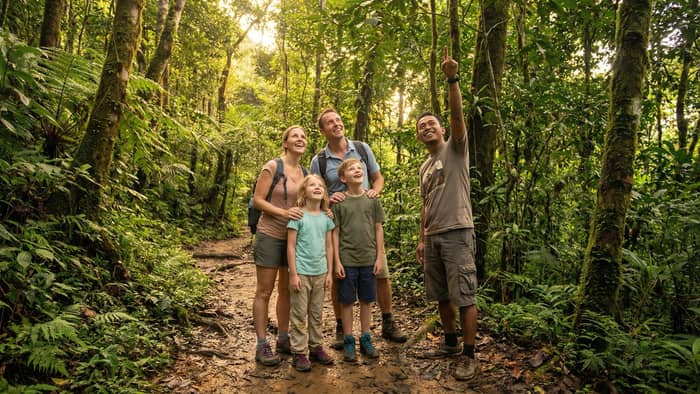
Yes, you can. But it is not the same as a beach holiday in Greece. Sumatra with children requires different planning, more realistic expectations and a willingness to accept that not everything will go to plan. On the other hand — the experiences children take home from Sumatra are something no resort can offer.
What works
Children are welcome in Indonesia. Indonesian culture is extraordinarily warm towards children. Local people smile at them, chat with them, offer them fruit or play with them. For children unaccustomed to this level of attention it can be surprising at first, but most adapt quickly.
Nature is the best classroom. Wild orangutans, volcanoes, rainforest, Lake Toba, islands — Sumatra offers experiential learning that no book can replace. School-age children will take more from this trip than from any nature club.
Food. Indonesian cuisine is varied and most children find something they like. Rice with chicken (ayam goreng) is a safe choice practically everywhere. Fruit is fresh, cheap and excellent — mango, papaya, pineapple, rambutan.
The pace can be adjusted. We adapt itineraries for families — fewer long drives, more time in one place, shorter treks, more rest by the water. This is not a compromise; it is a different style of travel.
What to consider
Long drives. Sumatra is not small and the roads are not motorways. Drives between major points take hours. For younger children this can be tough — bring tablets, games, headphones. Regular stops help.
Simple accommodation. Outside the main cities, accommodation is often basic. Hot water is not guaranteed, nor is air conditioning. For families used to standard hotel comfort, this can be challenging. For families who have done some travelling, it is part of the adventure.
Health and hygiene. With children, prevention matters more than with adults. Consult vaccinations and antimalarials with a travel medicine clinic. A basic first aid kit is essential. Drink only bottled water. Buy insect repellent locally — it is more effective.
Jungle trekking. A day trek in Bukit Lawang is manageable for children from about age six, provided they are used to walking in nature. The terrain is uneven and slippery. A two-day trek with an overnight stay in the rainforest is better suited to older children (10+) and depends on the individual child. The guide provides footwear for children — local rubber boots ideal for the muddy terrain.
Leeches. Children are usually no more afraid of leeches than adults — often less so. Knee-high socks and repellent work. The guide will help if one attaches.
Recommended ages
There is no exact threshold. It depends on the child, the family and the style of travel.
- 0–3 years: Possible but demanding. Limited medical facilities, heat, long drives. Consider whether it is worth it.
- 4–6 years: Doable with adjustments. Shorter routes, more time by the water, slower pace.
- 7–12 years: Ideal age. Children can handle treks, they are curious, they absorb new experiences and they remember them.
- 13+ years: Most of the programme works the same as for adults. Teenagers appreciate the adventure and authenticity.
What we adjust for families
When you travel with Simply Horas and have children, we adapt the itinerary:
- We shorten drives or break them up with interesting stops.
- We choose higher-comfort accommodation where available.
- We adjust trek lengths — shorter routes, more breaks.
- We add time by the water — Lake Toba, Pulau Banyak islands.
- Our guides have experience with families and know how to engage children in the programme.
Practical tips
- Children’s medicine — bring it from home. The pharmacy network on Sumatra is limited and children’s dosages are not always available.
- Snacks for the road — biscuits, nuts, dried fruit. Local food is great but not always available exactly when you need it.
- Headphones and a tablet for long drives. No shame — it works.
- Rain ponchos for younger children. Rain arrives fast and leaves fast, but in between you get soaked.
- Patience. Travelling Sumatra with children requires more flexibility than without. But the reward is proportional.