
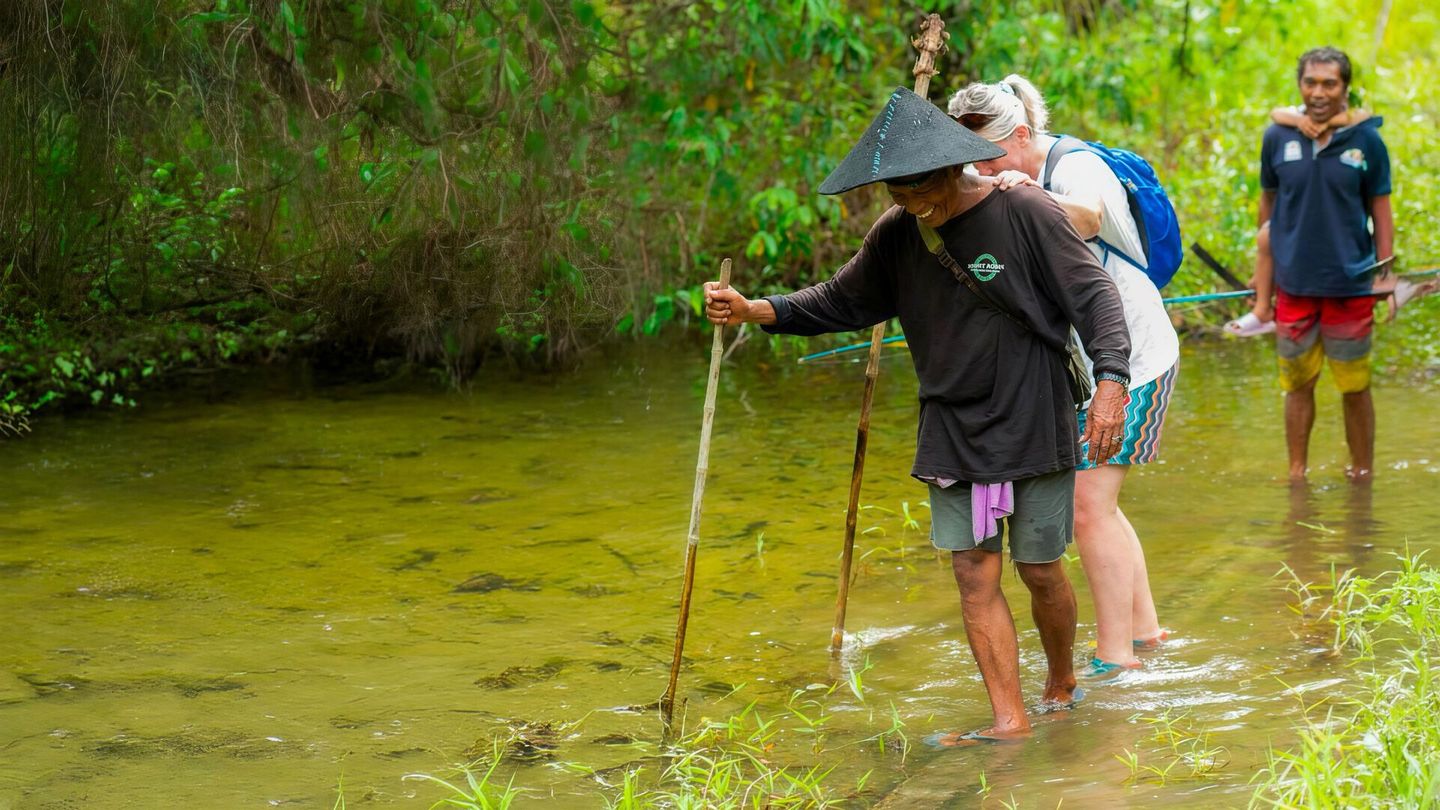

Safe travel to Indonesia
What you need to know before you set off for Indonesia. No myths, no scare tactics, based on real experience from the field.
Is Indonesia safe? That is one of the first questions we get. And it is completely legitimate — you are travelling to a country you do not know, to an environment that works differently from yours. A natural sense of caution is in order.
Indonesia is not a dangerous destination. But it is specific. Sumatra, Sulawesi, Sumba or Flores are not Bali — they are less touristy, the infrastructure is different and nature is wilder. That is precisely why it makes sense to travel with someone who knows local conditions from the inside. Not because you could not manage the journey yourselves, but because with local knowledge the journey tends to be safer, smoother and often deeper.
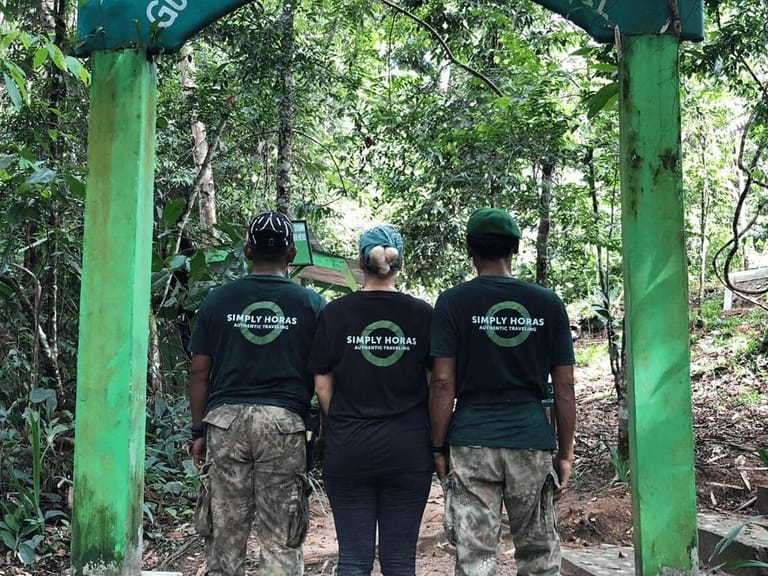
Entering Gunung Leuser National Park with Simply Horas guides
Health & diseases
The tropical climate brings specific health risks, but with proper preparation and ordinary caution they can be well minimised. Dengue fever occurs in Indonesia year-round and is transmitted by mosquitoes active during the day, so we recommend a quality repellent and suitable clothing.
Malaria risk varies by the area visited and the specific itinerary. In commonly visited areas of Sumatra and Sulawesi it is generally low, yet we recommend a consultation at a travel medicine clinic before departure. In more than ten years on Sumatra, however, we have not dealt with a single case of malaria or dengue fever among our clients.
The most common health complication for travellers tends to be ordinary stomach trouble. Drink bottled or filtered water, avoid ice from unknown sources and choose places with freshly prepared food. Our guides will take you to establishments we have had a good long-term experience with.
Recommended vaccinations: hepatitis A, typhoid and a valid basic booster (tetanus). We recommend visiting a specialised travel medicine clinic 4–6 weeks before departure. The doctor will recommend prevention precisely according to your itinerary.
Travel insurance
We recommend quality travel insurance to every traveller. It is not only about medical expenses, but also about peace of mind throughout the journey.
When choosing insurance, pay particular attention to the level of medical expenses, assistance services and any coverage of the activities you will undertake during the trip. Jungle trekking, rafting or riding a motorcycle may require extended coverage with some insurers.
If you are unsure, we are happy to go through the itinerary with you and point out the activities worth consulting with your insurer before departure.
Before the trip we always recommend verifying whether your insurance covers all planned activities. Usually it is just a minor extension of the policy that gives you greater peace of mind on the road.
Transport & roads
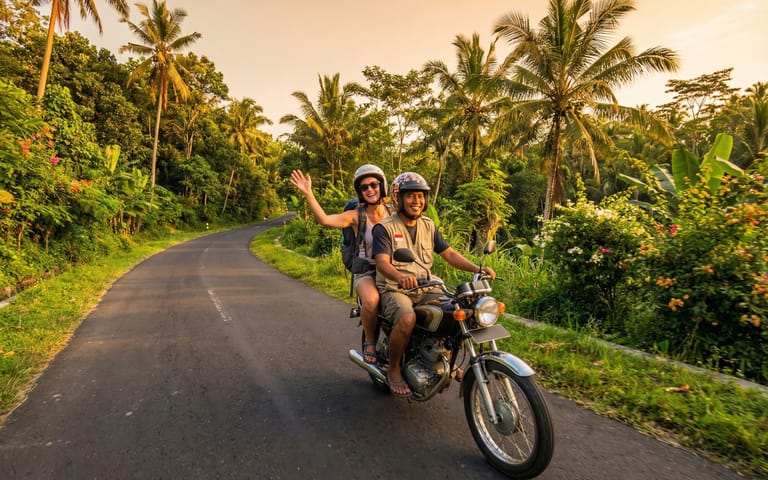
Roads in Indonesia are different from what you’re used to. In Sumatra and Sulawesi they’re often narrow, winding and in varying condition — from asphalt to dirt tracks. Motorcycles are the main transport in locations where buses can’t reach. Traffic rules work differently and traffic density can be surprising.
That’s why you travel with local drivers and guides who know the terrain and traffic inside out. This isn’t extra comfort — it’s a fundamental safety measure. Renting a motorcycle independently without experience with the terrain and local traffic is one of the riskiest things you can do in Indonesia.
Natural risks
Indonesia lies on the so-called Ring of Fire, and so you will find dozens of active volcanoes and an extraordinarily varied landscape here. Volcanic activity is continuously monitored and, in the event of increased activity, some areas are temporarily closed. We always adapt itineraries to the current situation and to the recommendations of local authorities.
Weather in tropical regions can change quickly, especially during the rainy season. Heavier rainfall may briefly affect some routes or activities, so we always plan the programme with sufficient flexibility and handle any changes on the spot.
In more than ten years of organising trips across Indonesia, we have never had to cut a trip short due to natural hazard. Thanks to local knowledge and continuous monitoring of conditions, we are able to react to changes in time.
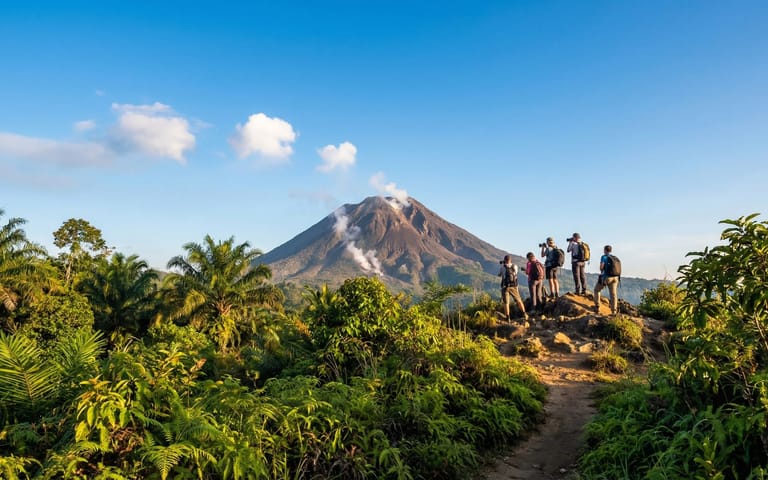
Active monitoring of natural conditions is part of every itinerary preparation. We do not rely on general forecasts — our guides have direct contact with local communities and know what is happening where.
Medical care on site
In larger cities such as Medan, Manado or Makassar you will find hospitals and private clinics of a very good standard. In more remote areas basic medical care is available, while more complex cases are routinely handled in the larger cities.
Thanks to many years of experience, we know which medical facilities to turn to in each region. Our guides are used to handling common traveller troubles and, if needed, will quickly arrange further care.
Part of the pre-trip preparation is also a recommendation on what to pack in your personal travel first aid kit.
Personal safety
Crime against tourists in Sumatra, Sulawesi, Sumba and Flores is low. Local people are friendly and curious — especially outside tourist centers, where they rarely encounter foreigners. Basic precautions (don’t flash valuables, lock your room, keep copies of documents) apply anywhere in the world, and Indonesia is no exception.
Indonesia is a predominantly Muslim country with deep respect for tradition. In more conservative areas (especially Aceh in northern Sumatra) modest clothing is appropriate. This applies generally in mosques and villages. This respect isn’t a limitation — it’s the key to being welcomed as guests, not as tourists.
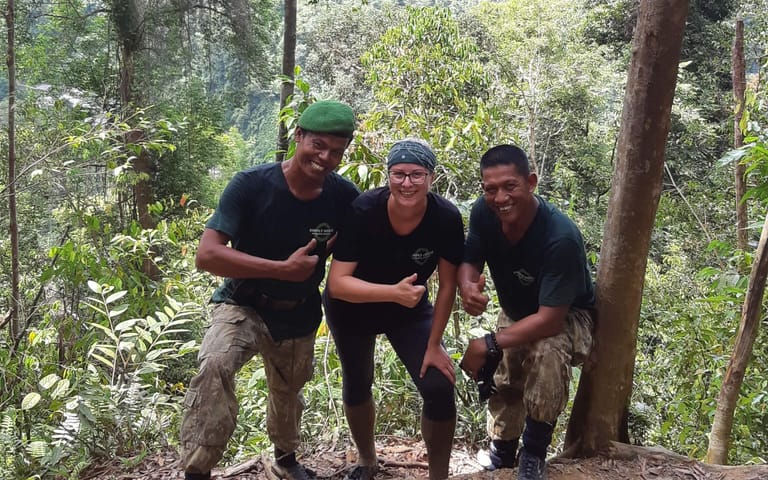
If you’re traveling as a woman (solo or in a group), there’s no need for concern. Our female clients consistently confirm they felt safe with the guides at all times — including motorcycle rides and jungle overnights.
How we handle it
Safety isn’t luck. It’s part of how we prepare every trip.
Itinerary preparation
Every itinerary accounts for current safety conditions, season, terrain and your group composition. A family with children travels differently than a pair of adventurers.
Guides on the ground
Ali, Aril and other guides know local conditions in real time. They know where to go, where not to, where to eat safely and where to stop in case of trouble. They speak local languages and have contacts in all regions.
Insurance & preparation
We help you understand what your insurance must cover for specific activities in the itinerary. We review your travel first aid kit and share practical preparation tips.
24/7 contact
You’re in touch with us throughout the entire trip. For any complication — medical, logistical or otherwise — you have someone to call. We handle it quickly and with local knowledge.
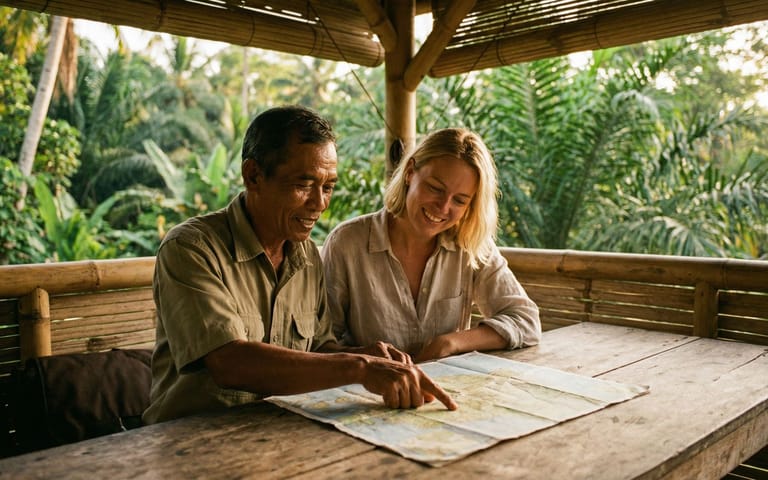
Preparation and local knowledge — the foundation of every safe journey
“Nowhere have we felt so safe and welcome.”
Four weeks in Sumatra with guides Ali, Aril and Imam

Practical checklist
Before departure
Quality travel insurance including the activities listed in your itinerary
Visit a travel medicine clinic 4–6 weeks before departure
Copies of documents stored separately (physical and digital)
Notify your bank about international travel
Personal travel first aid kit: repellent, medication you take regularly, remedies for digestive trouble, basic antiseptic and bandages
On site
Hydration — drink more than at home (heat + humidity drain fluids)
Apply repellent even in shade and after swimming
Drink bottled or filtered water. At street stalls we recommend caution with ice in drinks.
Food from places with fresh preparation and high customer turnover
Sunscreen SPF 50+ — tropical UV is strong even under trees and overcast skies
Let’s discuss your trip
Every itinerary is custom-made — considering safety, season and your group composition. Write to me and we’ll sort everything out together.