

Things to See & Do
A curated selection of places and experiences on an island that rewards curious travellers.
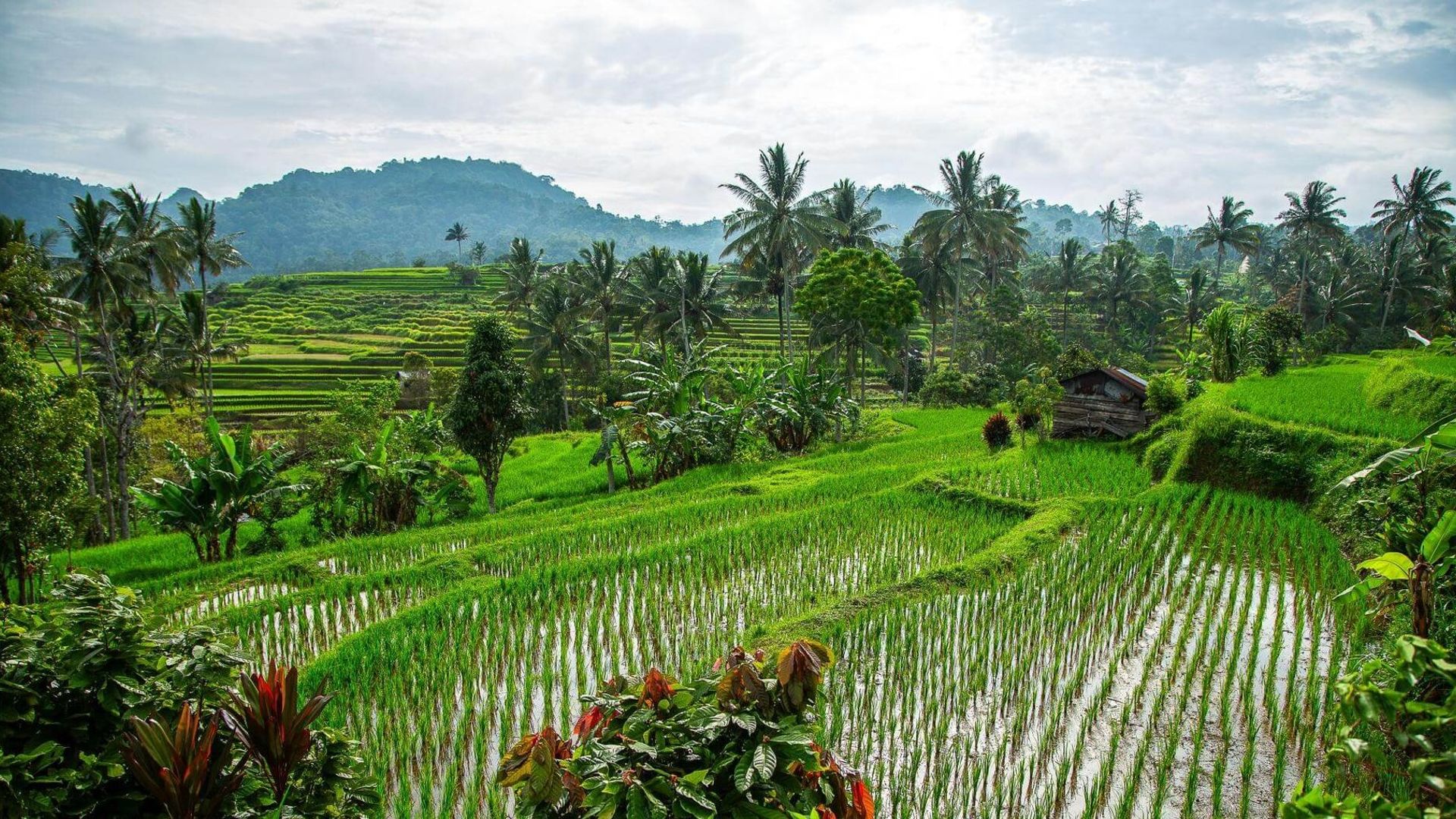
Sumatra covers approximately 443,000 km² — roughly the size of France. It is the sixth-largest island in the world. Over 45 million people live here and tropical rainforest covers most of the interior. The following selection is not a tourist checklist — it is a guide to places known by those who live on Sumatra.
Nature & wildlife
Sumatra is one of the last places on Earth where orangutans, tigers and rhinos live in the wild on one island. Its rainforest is the second-largest tropical ecosystem in the world — right after the Amazon.
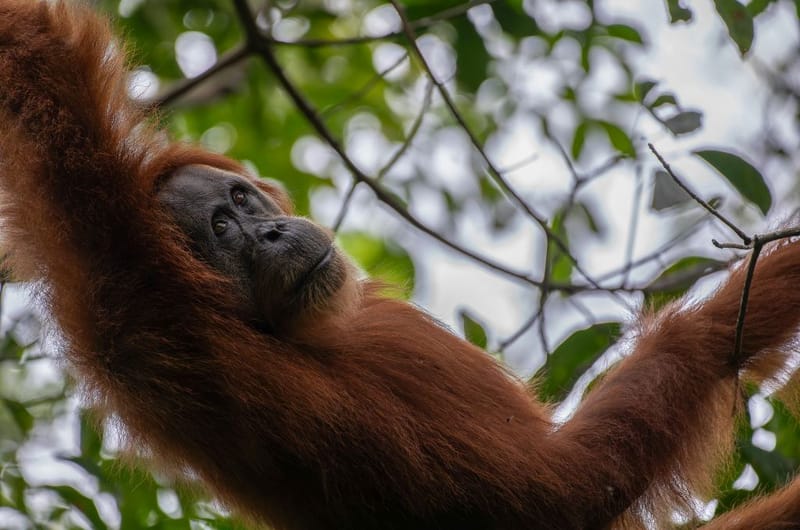
Gunung Leuser National Park
One of the last places on Earth where orangutans live in the wild. Trekking through primary rainforest with a local guide, night wildlife observation and rafting on the Bohorok river. Gunung Leuser Park is a UNESCO heritage site and home to over 380 bird species.
Best time for orangutan watching is early morning (6–10 am), when they forage in the tree canopy.
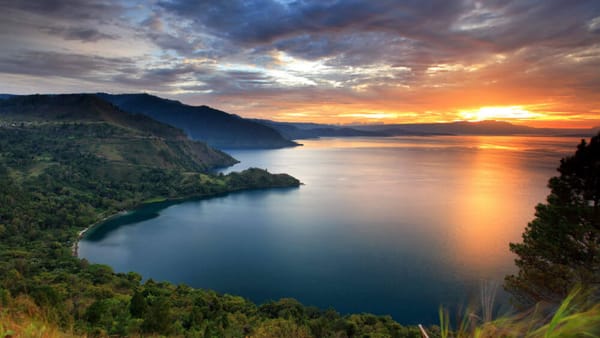
Lake Toba
The largest volcanic crater lake in the world — 100 km long, 30 km wide, at 911 metres above sea level. In the middle lies Samosir island, home of the Batak people. Ferry crossing, swimming in the lake and walks through traditional villages with rumah adat houses.
Read on blog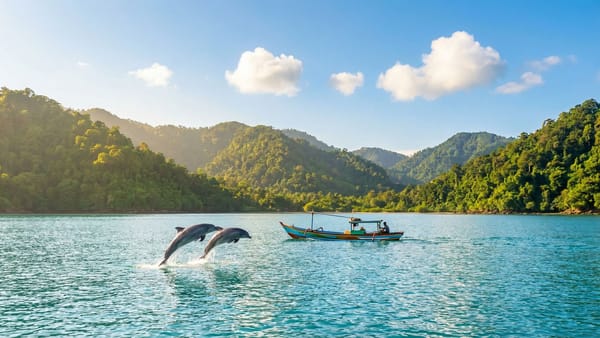
Kiluan Bay
Crystal-clear waters where dolphins regularly appear. In season, you can see them from the boat within arm’s reach. Sea turtles nest on the beach and the surrounding hills offer unrivalled views.
Optimal period for dolphin watching is April to September.
Culture & traditions
Sumatra is not just nature. The island is home to dozens of ethnic groups with their own languages, customs and architecture. The Batak around Lake Toba, the Minangkabau in the west, the Acehnese in the north — each region has its own identity.

Batak culture & Samosir
The Batak are one of the few peoples where Christianity coexists with animist traditions. Traditional rumah adat houses with boat-shaped roofs, ritual gondang music and funeral ceremonies that are not a tourist show, but a living part of everyday life.
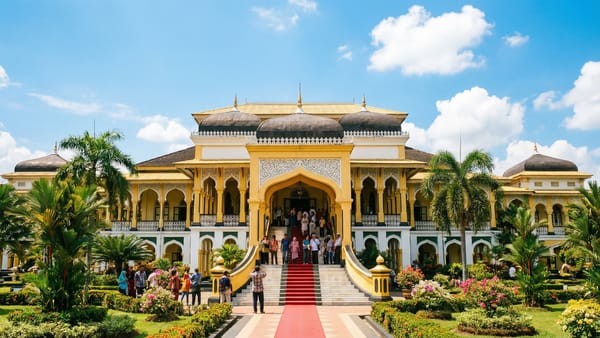
Medan
Indonesia’s fourth-largest city with 2.8 million inhabitants. Dutch colonial architecture, historic mosques and the Maimun Palace, where a sultan still symbolically resides. Medan is the gateway to Sumatra and deserves at least a day.
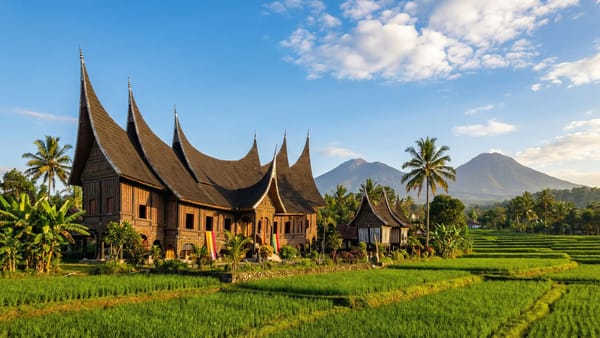
Minangkabau culture
The largest matrilineal society in the world — property is inherited through the maternal line. Traditional rumah gadang houses with buffalo-horn roofs, Pariangan village considered one of the most beautiful in Indonesia. And Padang cuisine, a legend in its own right.
Adventure
Sumatra is an island of volcanoes, rivers and ocean. Climbing active volcanoes, diving at coral reefs and trekking through rainforest offer experiences you will not find elsewhere in Southeast Asia.
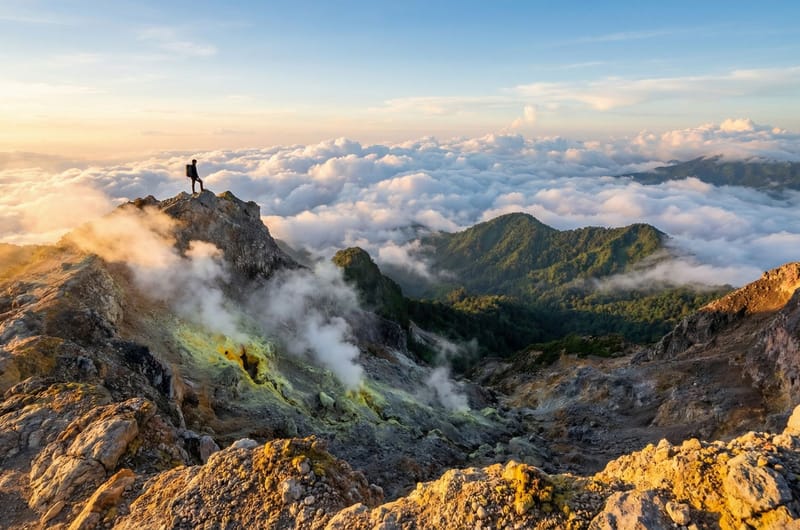
Mount Sibayak
An inactive volcano at 2,212 metres near the town of Berastagi. The summit climb is manageable without great fitness and the reward is a view into the crater with fumaroles and sulphur fumes. On a clear day, you can see across all of North Sumatra.
Ideally set off in the dark and reach the summit at sunrise. Nights in the crater are popular but require a tent and sleeping bag.
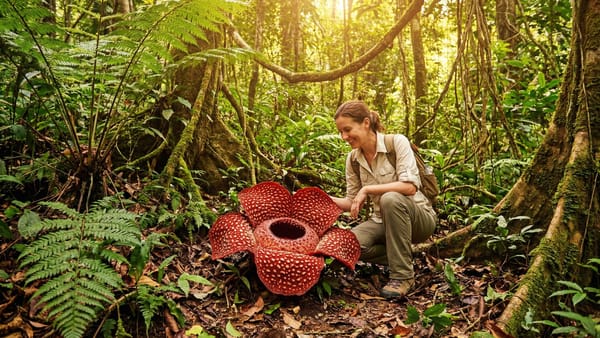
Padang & surroundings
The largest city on the west coast and a gateway to natural wonders nearby. In the Batang Palupuh reserve grows Rafflesia Arnoldi — the world’s largest flower. Nearby begins Kerinci Seblat National Park, one of the last homes of the Sumatran tiger.
Pulau Weh
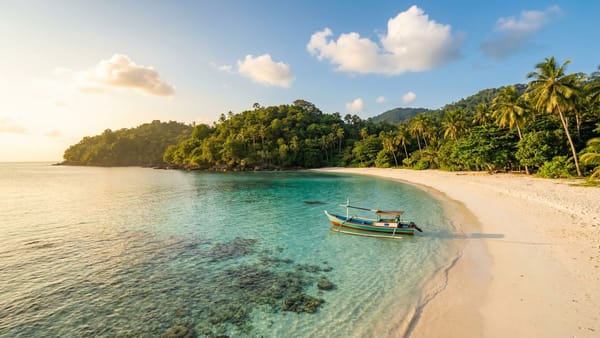
An island at the northernmost tip of Sumatra with some of the best diving conditions in Indonesia. Living coral reefs, manta rays, dolphins, sea turtles and occasionally whale sharks. Untouched by tourism and affordable compared to Bali.
Mount Kerinci
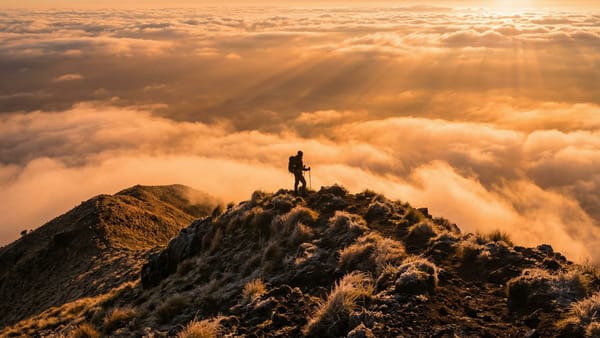
Sumatra’s tallest volcano (3,805 m) and the highest peak on the entire island. A two-day ascent through tropical rainforest and highland meadows, sunrise above a sea of clouds. For more experienced travellers seeking something beyond tourist trails.
The ascent requires a local guide and a permit. Best period: April to October.
Hidden gems
Sumatra is the sixth-largest island in the world — roughly the size of France. Most tourists only visit the north. But those who venture further find canyons, crater lakes and archipelagos that even guidebooks do not know about.

Sianok Canyon
A dramatic gorge with 120-metre walls near the town of Bukittinggi. The best view is at dawn, when mist creeps along the rock faces. The canyon hides Japanese bunkers from the Second World War and macaque colonies.
The canyon entrance is easily accessible from central Bukittinggi. Combine with a visit to nearby Pariangan village.
Banyak Islands
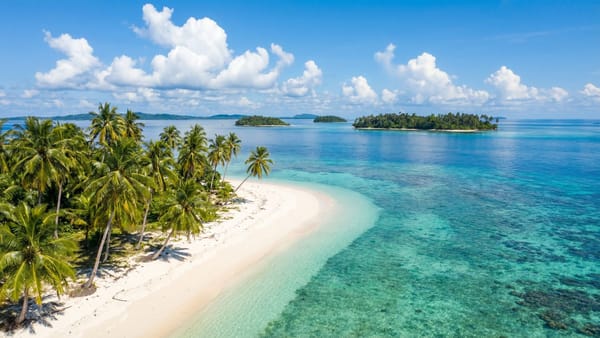
An archipelago of 99 islands, most of them uninhabited. White beaches, snorkelling among corals and absolute silence. Tourist infrastructure practically does not exist — and that is exactly what makes Banyak special.
Read on blog
Lake Maninjau
A crater lake near Bukittinggi, virtually unknown to international tourists. The road around the lake winds through 44 bends and offers one of the most beautiful cycling routes on Sumatra. Accommodation with fishing families right on the water.
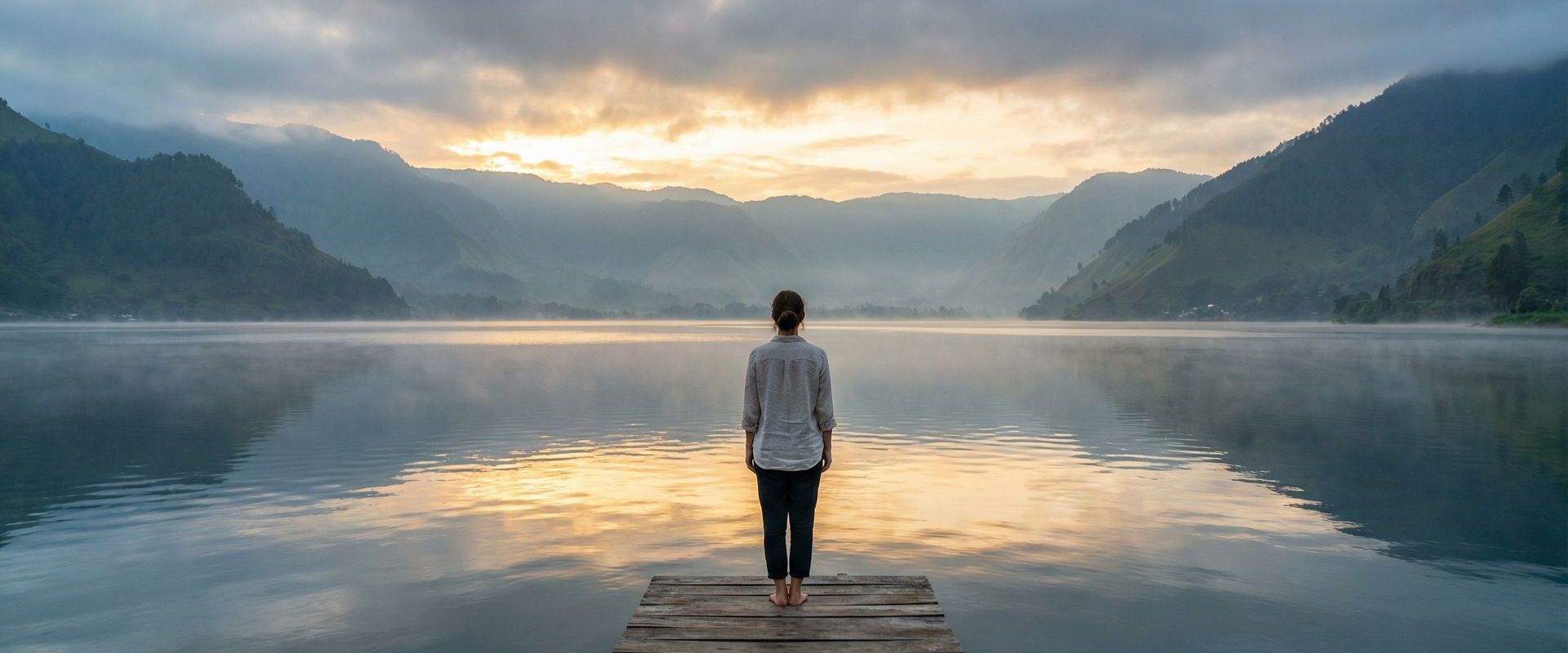
“Sumatra is not a stop on your itinerary. It is a place you remember for the rest of your life.”
You will visit these places on our routes
The places above are part of our proven itineraries. Consider them a starting point — after our consultation, I’ll tailor them to your exact wishes.
Planning Sumatra?
These places are just a starting point. After our conversation, I’ll design a trip made exactly for you — no groups, no fixed itineraries.
Plan my trip